
Industry Prospective
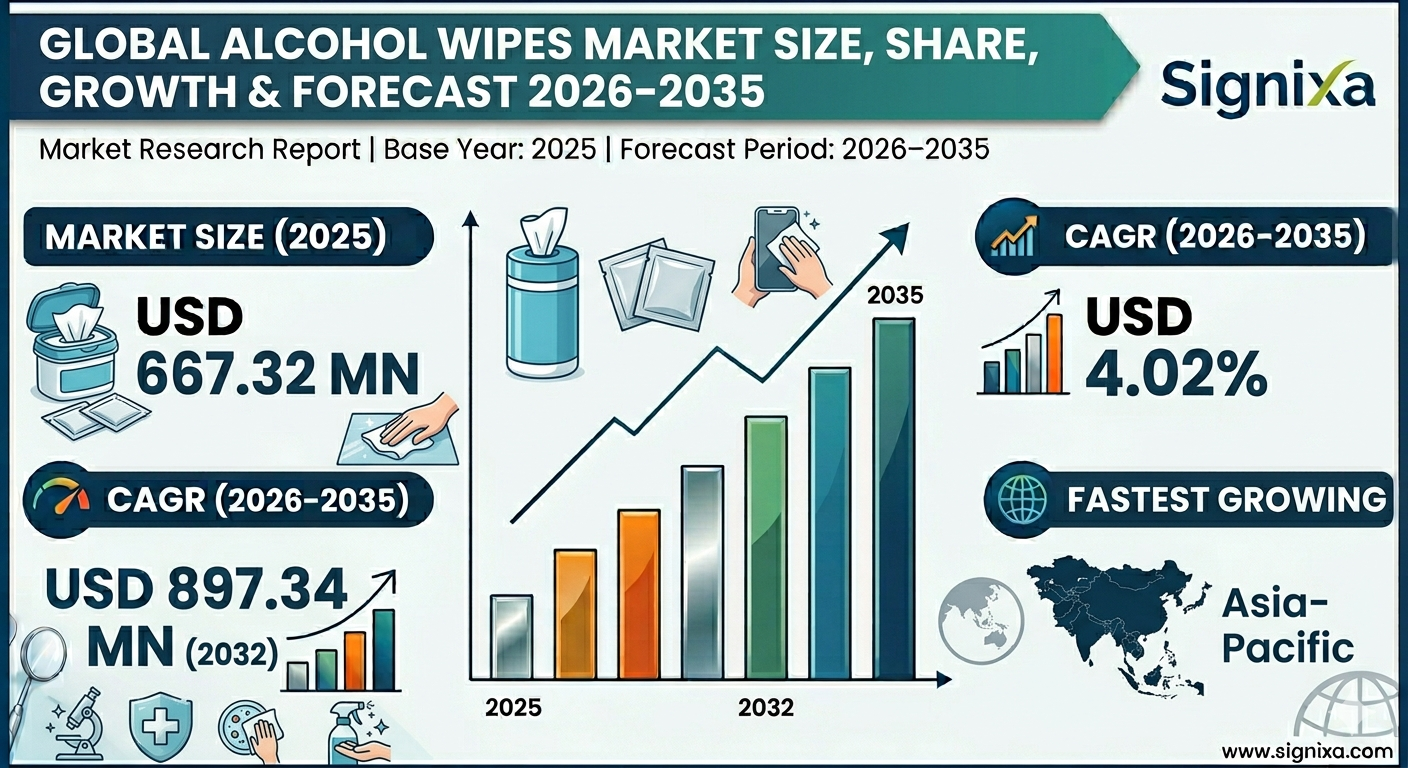
The global alcohol wipes market was valued at USD 694.15 Million in 2025 and is projected to reach approximately USD 897.34 million by 2035, growing at a CAGR of 4.02% between 2025 and 2035. The report explores current industry trends, key growth drivers, and challenges while offering strategic insights into regional and global market dynamics. In addition, the study identifies opportunities for expansion within the alcohol wipes sector.
Alcohol Wipes Market Overview
The alcohol wipes market includes disposable cloths pre-soaked in alcohol solutions used for cleaning, disinfection, and personal hygiene. Demand has been rising due to growing consumer awareness regarding hygiene, particularly after the COVID-19 pandemic. These wipes are extensively used in households, healthcare facilities, and commercial spaces for quick and effective disinfection. The convenience, portability, and germ-killing ability of alcohol wipes make them ideal for both daily and emergency use. Increasing preference for convenient sanitation products continues to support market expansion.
The alcohol wipes market has witnessed significant growth and transformation, primarily driven by a global surge in awareness regarding hygiene and sanitation, particularly intensified by recent public health crises. These convenient, pre-moistened wipes, typically containing at least 60% alcohol (often isopropyl or ethyl alcohol), offer a portable and effective solution for disinfecting surfaces, medical equipment, and even skin. Their versatility makes them indispensable across a wide range of applications, from healthcare settings where they are crucial for infection control in hospitals, clinics, and operating theatres, to commercial spaces like restaurants, offices, and public transportation where frequent disinfection of high-touch surfaces is paramount. Beyond professional use, the personal and household segment has seen substantial expansion as consumers increasingly adopt alcohol wipes for daily routines, including hand sanitization, cleaning electronic devices, and even minor first aid for cuts and scrapes. This widespread utility, coupled with their ease of use and immediate drying properties, positions alcohol wipes as a fundamental product in modern hygiene practices, far beyond their traditional medical applications.
The market's evolution is also characterized by a continuous focus on product innovation and diversification to meet various consumer needs and preferences. Manufacturers are developing alcohol wipes with enhanced features, such as those gentle enough for sensitive skin, infused with moisturizers to counteract the drying effects of alcohol, or even biodegradable options to address growing environmental concerns. The demand for sustainable products is prompting research and development into eco-friendly materials for the wipes themselves, moving towards natural fibers like wood pulp and cotton, and exploring more sustainable packaging solutions. Furthermore, the expansion of distribution channels, particularly the significant rise of e-commerce platforms, has played a crucial role in making alcohol wipes more accessible to a global consumer base. Supermarkets and hypermarkets also remain vital outlets, offering a wide array of brands and sizes, catering to diverse consumer preferences. This combined push for functionality, sustainability, and accessibility is shaping the competitive landscape and driving the continuous growth of the alcohol wipes market.
Key Findings
- The global alcohol wipes market is anticipated to grow at a CAGR of 4.02% from 2026 to 2035.
- The market size was estimated at USD 694.15 Million in 2025 and is expected to reach USD 897.34 million by 2035.
- The synthetic fabric segment holds a significant share due to cost efficiency and consistent quality (65%+ revenue share in 2025).
- The personal & household end-use segment dominates market share, contributing nearly 58% of global demand in 2025.
- Online distribution channels are expanding rapidly due to e-commerce penetration and consumer preference for contactless shopping.
- North America leads the global market with over 34% revenue share in 2025 due to high awareness and widespread hygiene product use.
- Asia-Pacific is projected to grow at the fastest CAGR of over 4.6% between 2026 and 2035.
Alcohol Wipes Market Dynamics
Post-COVID Hygiene Consciousness, Healthcare Demand & Personal Use Adoption
The rising global emphasis on hygiene and sanitation post-COVID-19 is a major driver for the alcohol wipes market. Consumers are now more conscious of disease prevention, driving demand for convenient disinfectant solutions. Alcohol wipes provide a simple, ready-to-use method of surface and skin sanitation. Their portability and ease of use make them preferred products in households, medical settings, and public places. Rising disposable incomes and expanding urbanization in emerging economies further contribute to increased consumption.
The alcohol wipes market dynamics are heavily influenced by the persistent global focus on hygiene and infection control. In healthcare, stringent regulations and the critical need to prevent Healthcare-Associated Infections (HAIs) drive consistent procurement by hospitals, clinics, and laboratories for disinfecting medical equipment, surfaces, and skin. Beyond medical applications, the commercial sector — encompassing food service, hospitality, retail, and education — has significantly increased its adoption of alcohol wipes for routine sanitation of high-touch surfaces, ensuring a safer environment for customers and employees. On the personal front, consumers have integrated alcohol wipes into their daily routines for hand sanitization, cleaning personal devices, and quick disinfection on the go, highlighting a fundamental shift in hygiene habits that is expected to endure long-term.
Another key factor influencing growth is the expanding commercial and institutional use of alcohol wipes. Healthcare settings such as hospitals and clinics depend heavily on these products for routine sterilization, especially for high-touch surfaces. Similarly, sectors like hospitality, retail, education, and transportation utilize alcohol wipes to maintain hygiene standards. Regulatory pressure to follow strict disinfection protocols and the need to maintain customer trust in service-based industries also bolster their adoption.
Despite the strong tailwinds, the alcohol wipes market faces certain challenges and restraints that can impact its growth trajectory. The volatility of raw material prices, particularly for alcohol (isopropyl or ethyl alcohol) and non-woven fabric materials, can lead to fluctuations in production costs and affect manufacturers' profit margins. Supply chain disruptions, as experienced during recent global events, can further exacerbate these price instabilities and impact product availability. Another significant restraint stems from environmental concerns associated with single-use disposable wipes. The majority of alcohol wipes are made from synthetic fibres that are not easily biodegradable, contributing to plastic pollution and landfill waste. This has led to increasing scrutiny from environmental advocacy groups and consumers, putting pressure on manufacturers to develop more sustainable and eco-friendly alternatives. Furthermore, while highly effective, frequent use of alcohol wipes on skin can lead to dryness or irritation for some individuals, which could prompt a search for alternative, gentler sanitizing solutions.
However, the market is ripe with opportunities for innovation and expansion. A key opportunity lies in the development and widespread adoption of sustainable and biodegradable alcohol wipes. As consumer environmental consciousness grows, products made from natural fibres like cotton or bamboo, and packaged in eco-friendly materials, are likely to gain significant market share. Manufacturers are investing in R&D to formulate alcohol wipes that are effective yet gentle on the skin, potentially by incorporating moisturizers or skin-conditioning agents. The diversification of product offerings, including various alcohol concentrations, wipe sizes, and packaging formats (e.g., individual sachets for portability, large bulk containers for commercial use), caters to a wider range of specific needs. Moreover, the increasing penetration of e-commerce channels provides a vast platform for market expansion, allowing brands to reach a global consumer base and offer greater product variety and convenience. Strategic partnerships between manufacturers and healthcare providers or commercial entities to implement comprehensive hygiene solutions also represent a significant growth avenue.
Alcohol Wipes Market Segmentation Analysis
By Fabric Material Segment Analysis: Synthetic vs. Natural Fabric
Synthetic Fabric (Polyester / Polypropylene)
The synthetic fabric segment held the dominant share of the market in 2025, contributing over 65% of the global revenue, due to its cost-effectiveness and high production scalability. Synthetic fibres, such as polyester and polypropylene, offer uniform texture, enhanced alcohol retention, and resistance to tearing, making them ideal for disinfection. The consistency and performance reliability of synthetic non-woven fabrics make them the standard material choice for both medical-grade and consumer alcohol wipes globally.
Natural Fabric (Cotton / Bamboo / Wood Pulp)
Natural fabrics like cotton or bamboo, while preferred for eco-friendliness, accounted for less than 35% market share, as their higher production cost and shorter shelf life have limited widespread adoption. However, the growing sustainability movement and increasing consumer preference for biodegradable options are accelerating the development of natural-fiber alcohol wipes. Products positioned for sensitive skin and eco-conscious consumers are expected to see the fastest growth within this segment throughout the forecast period.
By End-Use Segment Analysis: Personal & Household vs. Commercial
Personal & Household
The personal & household segment accounted for the largest revenue share in 2025, contributing nearly 58% of global demand, driven by increasing consumer focus on hygiene at home. Alcohol wipes are widely used for sanitizing hands, gadgets, surfaces, and everyday items. The post-pandemic shift in consumer hygiene behavior has permanently elevated demand in this segment, as household consumers have integrated alcohol wipes into regular daily routines for cleaning electronics, surfaces, and personal first-aid applications.
Commercial (Healthcare, Offices, Hospitality, Retail)
The commercial segment, which includes hospitals, offices, and retail outlets, represented about 42% of market revenue in 2025. Growth in this segment is supported by institutional disinfection needs and mandatory hygiene compliance in high-contact environments. Healthcare facilities remain the highest-value commercial customers, requiring medical-grade alcohol wipes for infection control. Sectors such as hospitality, food service, education, and public transportation are also significant and growing commercial consumers globally.
By Distribution Channel Segment Analysis
The distribution landscape for alcohol wipes is diverse, with four primary channels each commanding meaningful share:
Supermarkets & Hypermarkets
Supermarkets and hypermarkets dominated distribution in 2025 with a 39% market share due to their wide reach and consumer trust in physical retail. These outlets offer a broad assortment of brands, formats, and pack sizes, allowing consumers to compare products in person — particularly important for new users or bulk purchasers evaluating quality and value before committing to a brand.
Online Channels
Online channels followed with around 34% share, gaining momentum as consumers increasingly prefer contactless shopping and subscription models. E-commerce platforms enable brands to reach a global consumer base without extensive physical retail presence, and subscription delivery models for hygiene consumables are driving recurring revenue. This channel is expected to surpass supermarkets in the coming years as digital adoption accelerates across all demographics.
Convenience Stores
Convenience stores contributed roughly 18% in 2025, especially for impulse buys and immediate needs. The portability and single-use nature of alcohol wipe sachets make them a natural fit for convenience retail, catering to on-the-go consumers who need a quick hygiene solution while traveling, commuting, or during outdoor activities.
Pharmacies & Others
Other channels, such as pharmacies and specialty stores, made up the remaining 9%, primarily catering to medical and premium hygiene consumers. Pharmacies are important for medical-grade and healthcare-specification alcohol wipes, often sold alongside first aid products and prescribed to hospitals and clinics through institutional supply chains.
Report Attributes & Market Scope
| Report Attribute | Details |
|---|---|
| Market Size Value in 2025 | USD 667.32 Million |
| Market Size Value in 2035 | USD 897.34 Million |
| CAGR (2026-2035) | 4.02% |
| Base Year Used for Estimation | 2025 |
| Historic Data | 2020-2025 |
| Forecast Period | 2026-2035 |
| Segments Covered -By Fabric Material |
|
| Segments Covered -By End-Use |
|
| Segments Covered -By Distribution Channel |
|
| Regions Covered | North America, Europe, Asia Pacific, Latin America, Middle East and Africa |
| Major Countries Covered | U.S., Canada, Mexico, Germany, UK, France, Italy, Spain, Russia, China, Japan, South Korea, India, Southeast Asia Countries, Brazil, Argentina, GCC Countries, Turkey, Iran, Israel, South Africa, Egypt, Nigeria, etc. |
| Key Companies Profiled | The Clorox Company, PDI Healthcare, 3M Company, Reckitt Benckiser Group, GOJO Industries, Kimberly-Clark Corporation, Nice-Pak Products, Johnson & Johnson, Edgewell Personal Care, and Beiersdorf AG. |
Alcohol Wipes Market Regional Analysis
North America led the alcohol wipes market in 2025, accounting for over 34% of global revenue, driven by high health awareness, frequent hygiene product usage, and strong retail infrastructure. Europe followed with around 28% market share, supported by widespread disinfection mandates and eco-conscious product choices. The Asia-Pacific region is expected to witness the fastest CAGR of over 4.6% between 2026 and 2035 due to population growth, improving living standards, and expanding healthcare access. Latin America and the Middle East & Africa remain emerging markets with increasing potential.
North America (Market Leader -34%+ Share)
North America stands as a leading market for alcohol wipes, primarily driven by a high level of health consciousness, stringent hygiene regulations in healthcare settings, and significant consumer awareness. The United States demonstrates robust demand, fuelled by its extensive healthcare infrastructure, where alcohol wipes are indispensable for infection control in hospitals, clinics, and laboratories. The commercial sector -encompassing food service, hospitality, and educational institutions — has also significantly increased its adoption of alcohol wipes for surface disinfection. Furthermore, North American consumers have widely integrated alcohol wipes into their daily routines for personal hygiene and quick cleaning of electronics and household surfaces, a trend accelerated by recent global health events. The region benefits from a strong retail presence, including supermarkets, hypermarkets, and a well-developed e-commerce ecosystem, making these products readily accessible. Innovation also plays a key role, with manufacturers focusing on developing products that balance efficacy with skin gentleness and environmental responsibility, such as biodegradable options.
Asia-Pacific (Fastest Growing -CAGR 4.6%+)
The Asia Pacific region is rapidly emerging as the largest and fastest-growing market for alcohol wipes globally. This surge is primarily attributed to its vast population base, rapidly developing healthcare infrastructure, increasing disposable incomes, and a heightened awareness of hygiene and sanitation practices. Countries like China and India are at the forefront of this growth, driven by massive urbanization, industrial expansion, and significant investments in public health initiatives. The region experienced a substantial increase in demand for alcohol wipes during and after the recent pandemic, which instilled a long-term shift in consumer behaviour towards prioritizing cleanliness. Beyond healthcare, there is a burgeoning demand from the commercial and personal segments, with alcohol wipes becoming a common household item and a portable solution for on-the-go sanitization. Local manufacturers, alongside international players, are expanding their production capacities and diversifying their product offerings to cater to the immense and varied demands of this dynamic region.
Europe (~28% Market Share)
Europe represents a mature and significant market for alcohol wipes, characterized by a strong emphasis on public health, well-established healthcare systems, and evolving regulatory standards for hygiene. Countries such as Germany, the UK, and France are key contributors to regional demand. The European market sees consistent use of alcohol wipes across various applications, from critical disinfection in medical facilities to everyday sanitization in households and commercial spaces. Regulatory bodies in Europe often impose strict guidelines on biocidal products, influencing the formulation and labelling of alcohol wipes, which in turn drives manufacturers to ensure compliance and product safety. There's a growing inclination among European consumers towards sustainable and environmentally friendly products, leading to an increasing demand for alcohol wipes made from biodegradable materials and packaged in eco-conscious ways. The widespread availability through diverse distribution channels, including pharmacies and online stores, further facilitates market penetration and consumer access.
Middle East & Africa
The Middle East and Africa (MEA) region presents a growing market for alcohol wipes, driven by increasing healthcare expenditure, improving healthcare infrastructure, and a rising awareness regarding infection control measures. Countries within the Gulf Cooperation Council (GCC) are particularly significant contributors, characterized by high per capita incomes and a growing focus on modern healthcare facilities. Alcohol wipes are increasingly adopted in hospitals and clinics for routine disinfection, and there's a growing uptake in commercial sectors like hospitality and food service. While the market is still in its developing stages compared to other regions, urbanization and changing lifestyles are fuelling the demand for convenient and portable hygiene solutions. Challenges in some parts of the MEA region include varying levels of healthcare infrastructure development and economic disparities, which can affect the affordability and accessibility of certain products. However, ongoing government initiatives to enhance public health and hygiene standards are expected to contribute to sustained growth in the alcohol wipes market across the MEA region.
Latin America
Latin America remains an emerging market for alcohol wipes with increasing potential. Rising health awareness, expanding urbanization, and growing middle-class populations are gradually elevating demand for hygienic consumer products across the region. Brazil and Mexico represent the largest markets, supported by expanding retail infrastructure and increasing healthcare spending. As e-commerce penetration grows and awareness of infection prevention improves, alcohol wipes are expected to gain broader adoption across both personal and commercial segments in Latin America.
Recent Developments in the Alcohol Wipes Market
-
2023
PDI Healthcare introduced an advanced alcohol wipe product targeting hospital disinfection with quicker kill time, addressing the growing institutional demand for faster-acting surface and equipment disinfection solutions in clinical settings. The product is designed to meet the rigorous infection control requirements of hospitals and healthcare-associated infection (HAI) prevention protocols.
-
2022
Reckitt Benckiser expanded its Lysol wipes portfolio with new variants designed for sensitive skin, addressing one of the major consumer pain points associated with frequent alcohol wipe use. The new formulations incorporate moisturizing agents to reduce skin dryness and irritation while maintaining effective disinfection performance, signaling the industry's broader shift toward skin-friendly formulations.
Alcohol Wipes Market: Competitive Landscape
Key players in the alcohol wipes market include The Clorox Company, PDI Healthcare, 3M Company, Reckitt Benckiser Group, GOJO Industries, Kimberly-Clark Corporation, Nice-Pak Products, Johnson & Johnson, Edgewell Personal Care, and Beiersdorf AG. These companies focus on innovation, skin-safe formulations, rapid disinfection technology, and global distribution to strengthen their market positions. Strategic expansions, sustainability initiatives, and targeted marketing are essential competitive tactics as demand continues to rise across sectors.
The competitive landscape of the alcohol wipes market is highly fragmented, characterized by a mix of large, diversified hygiene product manufacturers and numerous regional and niche players. Established companies leverage their extensive brand recognition, global distribution networks, and substantial R&D capabilities to maintain a dominant position. Their strategies often include product diversification, offering a wide range of alcohol wipe formulations (e.g., varying alcohol concentrations, different fabric materials), packaging sizes (individual sachets, canisters, bulk packs), and target applications (medical, personal, commercial). These players also invest heavily in marketing and advertising to reinforce their brand image as reliable and effective hygiene solutions. Furthermore, their ability to secure raw materials at competitive prices and manage complex supply chains efficiently provides a significant advantage, especially during periods of high demand or supply disruptions. Compliance with stringent regulatory standards for medical and consumer products is another area where larger entities can often invest more resources, setting a high bar for smaller competitors.
Innovation and sustainability are becoming crucial differentiators in this competitive environment. Emerging and agile players often focus on carving out niche markets by offering specialized products, such as alcohol wipes formulated for sensitive skin with added moisturizers, or those made from 100% biodegradable materials. The growing consumer demand for eco-friendly products is driving a significant shift in manufacturing practices, with brands competing on their ability to offer sustainable solutions that minimize environmental impact, from sourcing raw materials to packaging. E-commerce platforms have also levelled the playing field to some extent, allowing smaller brands to reach a wider audience without the need for extensive physical retail presence. The competitive dynamic is further shaped by strategic partnerships, with manufacturers collaborating with healthcare providers or large commercial entities to provide customized hygiene solutions. This continuous drive for product innovation, coupled with a growing emphasis on ethical and sustainable practices, defines the evolving competitive landscape.
Key Companies Profiled
Global Alcohol Wipes Market Segmentation Summary
By Fabric Material
By End-Use
By Distribution Channel
By Region
Frequently Asked Questions (FAQs): Alcohol Wipes Market
What are alcohol wipes?
Alcohol wipes are pre-moistened towelettes infused with isopropyl or ethyl alcohol, used primarily for disinfection and cleaning. They are widely used in households, healthcare settings, and commercial spaces for sanitizing hands, surfaces, and equipment.
Which key factors will influence the alcohol wipes market growth over 2026-2035?
The alcohol wipes market is expected to grow due to increasing hygiene awareness, rising demand in healthcare and commercial environments, convenience of portable disinfection, and expansion of e-commerce distribution.
What will be the value of the alcohol wipes market during 2026-2035?
According to the study, the global alcohol wipes market size was worth around USD 694.15 Million in 2025 and is predicted to grow to approximately USD 897.34 million by 2035.
What will be the CAGR value of the alcohol wipes market during 2026-2035?
The CAGR value of the alcohol wipes market is expected to be around 4.02% during 2026–2035.
Which region will contribute notably towards the alcohol wipes market value?
The alcohol wipes market is led by North America, which accounted for over 34% of revenue in 2025, followed by Europe and Asia-Pacific. Asia-Pacific is projected to register the fastest growth rate — a CAGR of over 4.6% — due to rising hygiene awareness and expanding healthcare infrastructure.
Which are the major players leveraging the alcohol wipes market growth?
Key players operating in the global alcohol wipes market include The Clorox Company, PDI Healthcare, Reckitt Benckiser, 3M, Kimberly-Clark Corporation, GAMA Healthcare, Nice-Pak Products, Dynarex Corporation, Diamond Wipes International, and Pal International Ltd.
What can be expected from the global alcohol wipes market report?
The report provides a comprehensive analysis of the alcohol wipes market, covering market dynamics, segmentation by fabric type, end-use, and distribution channels, regional performance, recent innovations, and competitive strategies. It highlights growth opportunities, key challenges, and trends shaping the future of the market.